Charging forward

Advancing a pipeline of molecules designed to silence sensory
neuron hypersensitivity in chronic cough and beyond

Taplucainium: Silencing cough signaling at the source

Taplucainium (formerly NTX-1175) inhalation powder is a first-in-class small molecule nocion™ in the novel class of charged sodium channel blockers (CSCBs) designed to selectively silence activated/inflamed sensory neurons (nociceptors) in the airway. Once-daily dosing of taplucainium, delivered locally to the lung, has shown rapid onset and relief from cough with minimal systemic side effects.

Taplucainium program snapshot

  • Indication: Refractory and unexplained chronic cough (rCC/uCC)
  • Stage: Phase 2b (ASPIRE study); topline results expected Q3 2026
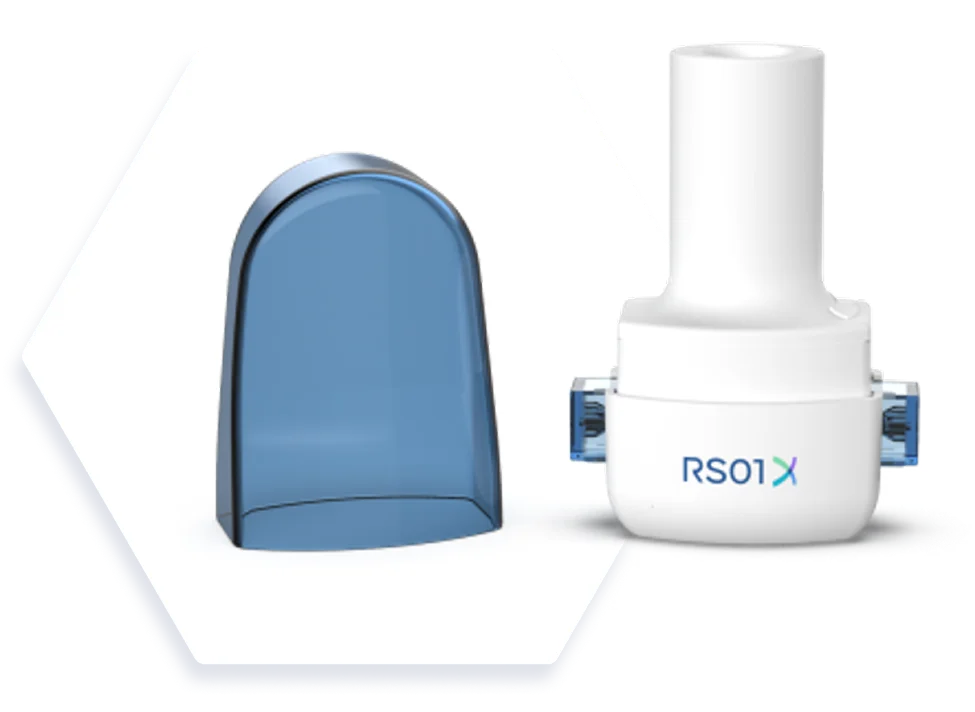
  • Dosing: Once daily via dry powder inhaler
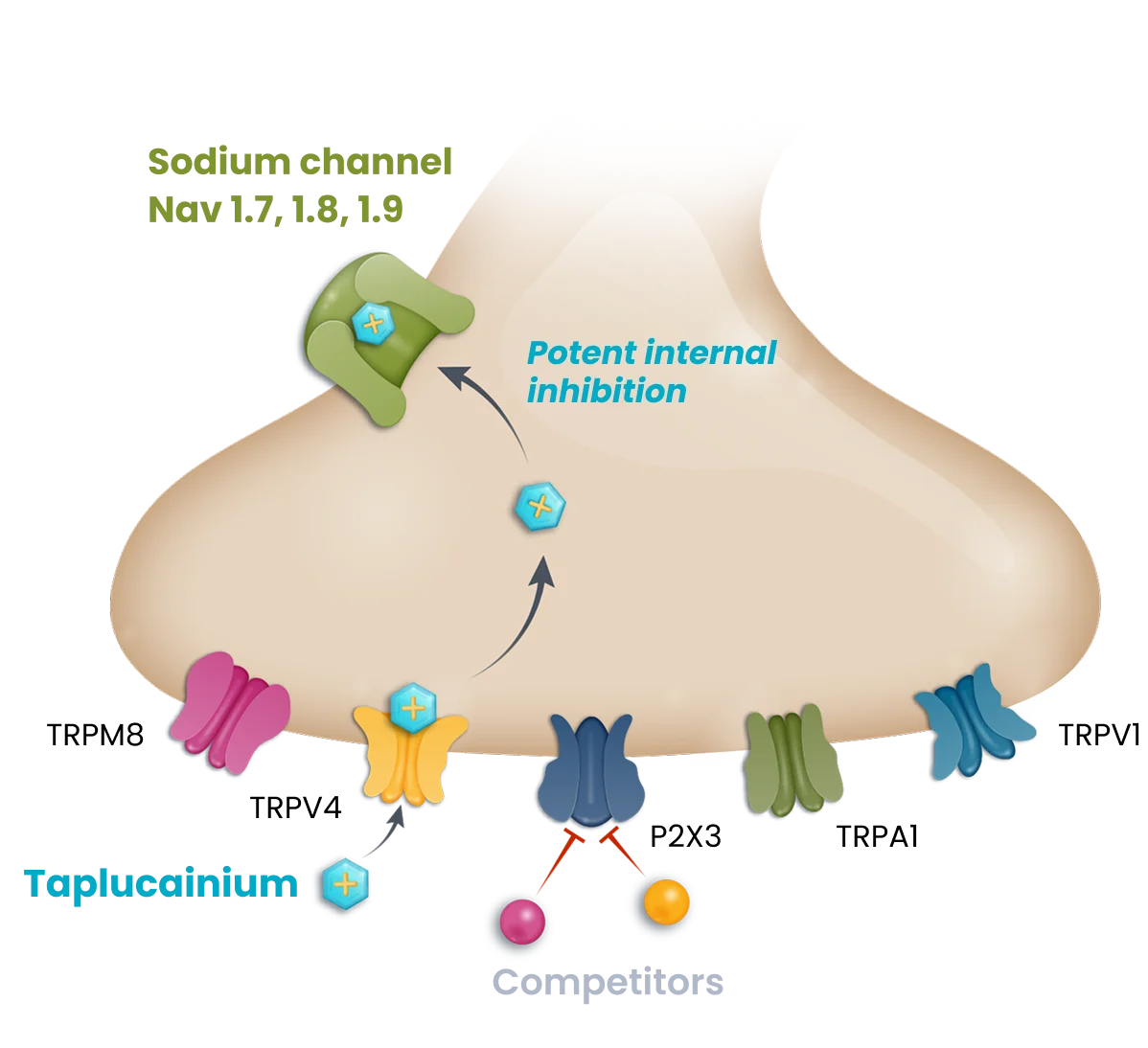
  • Mechanism of action: Enters neurons through triggered large pore channels (LPCs) and silences the urge to cough by blocking downstream sodium channel activation

Taplucainium development is supported by preclinical and clinical activity, rapid-onset signal, and consistent tolerability

Three completed studies have produced a consistent profile supporting taplucainium’s development in rCC/uCC. Across preclinical, Phase 1, Phase 2a, and bridging studies, taplucainium has demonstrated rapid onset of cough reduction and a favorable tolerability profile, supporting the ongoing Phase 2b ASPIRE study, which is designed to evaluate once-daily taplucainium inhalation powder in adults with rCC/uCC.

Taplucainium is designed to silence cough signaling from within nociceptors

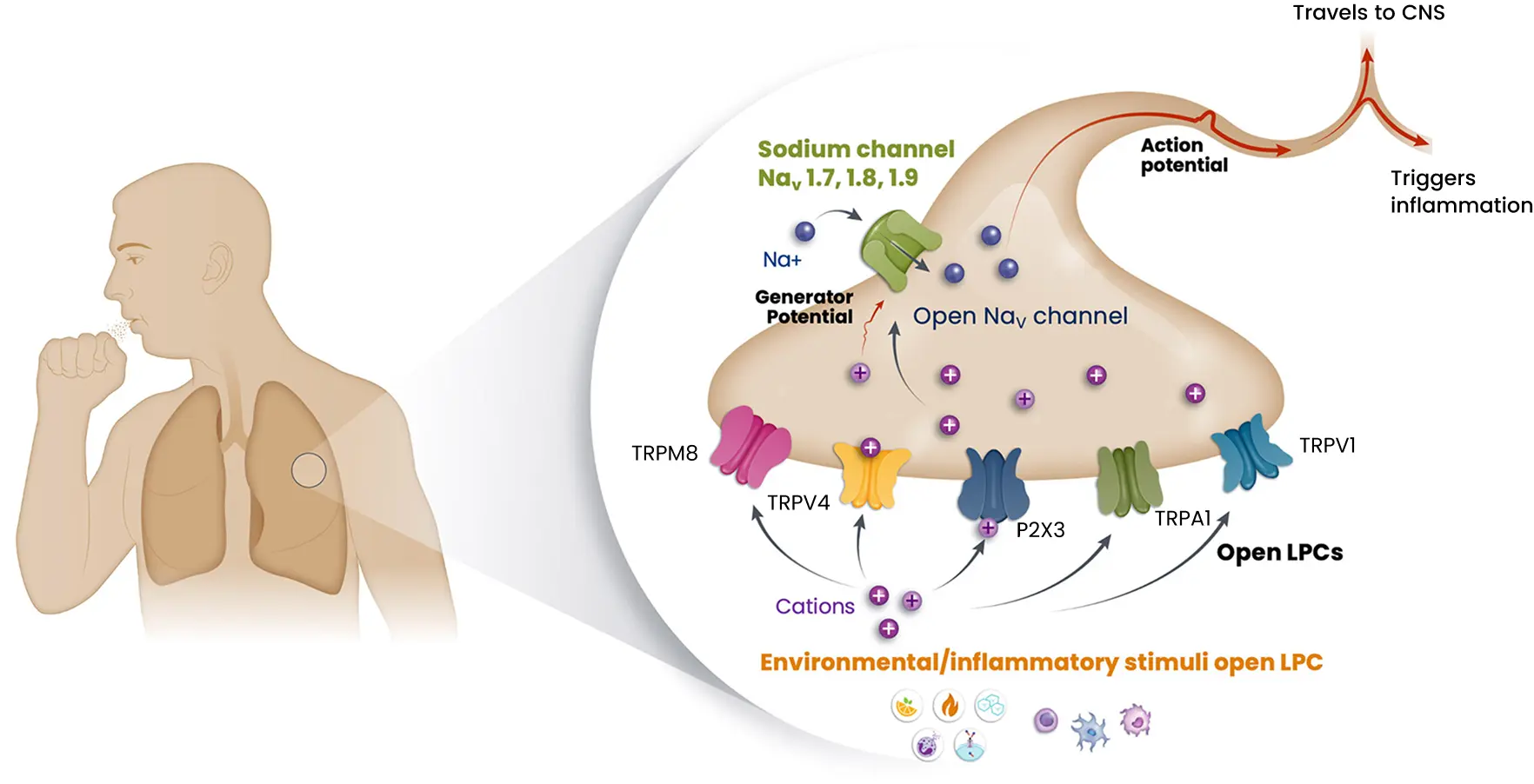
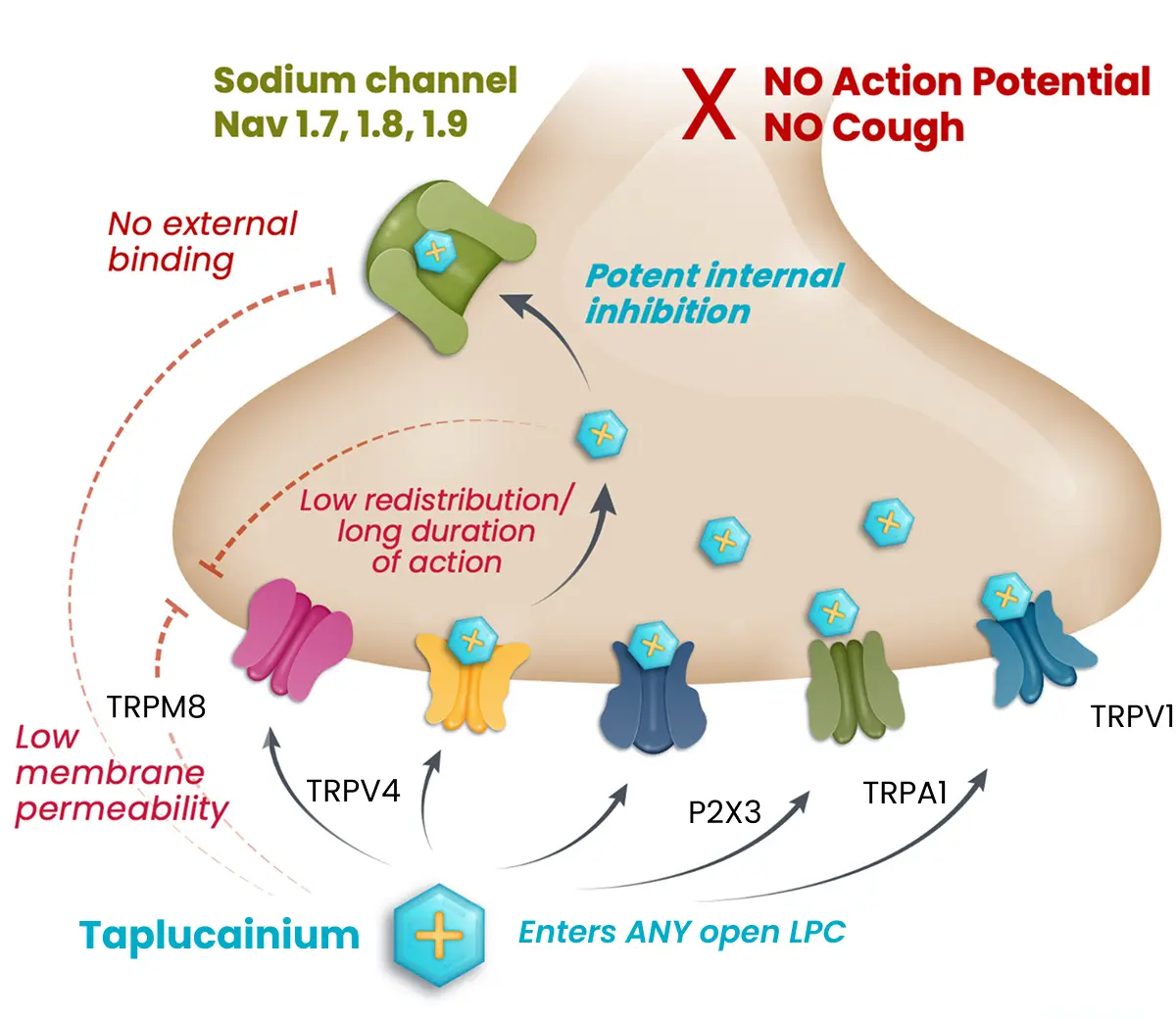
With delivery directly to the airway by a dry powder inhaler, taplucainium enters nociceptors through open large pore channels and blocks the signaling to the central nervous system that leads to the cough response. This unique mechanism is intended to provide fast-acting and durable cough control with a profile designed to avoid limitations that have constrained prior investigational approaches in chronic cough. Follow the steps below to learn more about how taplucainium works.
1

Stimuli trigger LPCs to open

Environmental or inflammatory stimuli cause large pore channels (LPCs including TRPV1, TRPA1, P2X3, TRPV4, TRPM8) in the cell membrane of nociceptors to open, allowing positively charged small molecules (cations) to enter and generate a depolarizing generator potential.
2

Taplucainium selectively gains access through open LPCs

Because it is a positively charged nocion™, taplucainium enters sensory neurons only when LPCs are open/activated, rather than passively diffusing across cell membranes.
3

Internal NaV inhibition prevents cough signaling

Once inside activated nociceptors, taplucainium is designed to inhibit the sodium channels responsible for initiating the action potential that propagates cough signaling to the central nervous system (CNS) – interrupting the cough reflex at the source.
4

Local delivery supports rapid onset and long duration

Taplucainium’s positive charge inhibits redistribution or passive diffusion across nociceptor membranes. In prior clinical studies, cough reduction was observed within 15 minutes. Local delivery to the lung and once-daily dosing resulted in a long duration of action and up to 24 hours of symptom relief.
5

Broader access, downstream silencing, and low systemic exposure compared to P2X3 antagonists.

Unlike P2X3 antagonists, which block a single upstream trigger, taplucainium works downstream and is the only candidate for rCC/uCC with the ability to enter through any activated large pore channel to silence the electrical signal that drives cough regardless of the initial stimulus.

First-in-class and best-in-class potential

Taplucainium

  • Acts downstream of LPC triggers
  • Limited absorption beyond the lung
  • Does not cross the blood-brain barrier
  • No taste disturbances
  • No impact on cardiac or pulmonary function
  • Not anesthetic and no numbness or paralysis

Competing rCC/uCC approaches

  • Block a specific LPC or opioid target
  • Broad systemic distribution
  • Opioid-based approaches associated with CNS effects and safety limitations
  • P2X3 antagonists are associated with taste disturbances
  • Lidocaine-like anesthetics have cardiac, numbness, and paralysis safety limitations

A mechanism that is not limited to a single LPC may be relevant across heterogeneous cough pathophysiology and potentially across cough settings beyond rCC/uCC.